
Author: David Botero
-
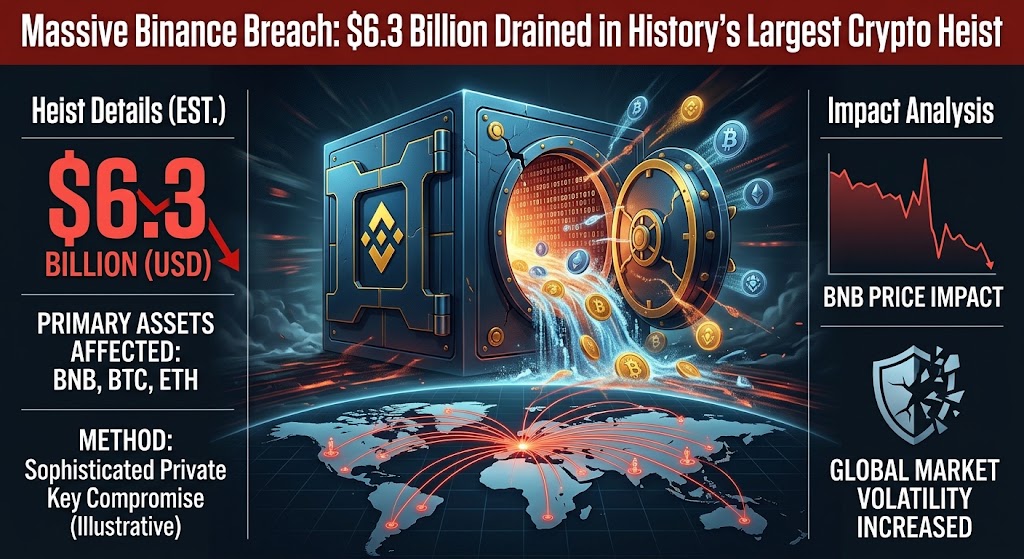
Binance has halted all user withdrawals following a devastating “complex attack” that drained approximately $6.3 billion from its hot wallets on October 29, 2026. The historic breach is the largest cryptocurrency theft on record. Despite the unprecedented scale, Binance co-CEOs Richard Teng and Yi He quickly reassured customers that all user losses will be fully…
-

CHICAGO — Epic Games is no longer just experimenting with artificial intelligence; they are rewriting the rulebook of game development. In a series of recent disclosures, the company confirmed a dramatic pivot toward “maximum AI acceleration”. “Yes, we are vibe-coding things,” Marcus Wassmer, Epic’s Executive VP of Development, stated bluntly. “That means our engineers are…
-

As artificial intelligence, quantum computing, and massive data centers push the limits of modern technology, traditional hardware is running into a physical wall. Silicon-based electronic chips are struggling with overheating, massive energy consumption, and electronic latency. Enter Akhetonics, a Berlin-based hardware startup that is flipping the script on computing. Instead of using electrons moving through…
-

Planning your 2027 IT budget? Here’s what we recommend watching and doing, based on the trends covered in this series. Forecasts can change, so treat this as a planning aid. 1. Hardware: buy early and buy smart – Expect continued price pressure. AI-driven demand has tightened memory and storage supply, and several analysts expect tight…
-

Technology forecasting is hard, even for experts. A look at well-known misses offers useful habits for business planning. Predictions that missed “Spam will be solved in two years.” At the World Economic Forum in 2004, Bill Gates predicted that spam would be eliminated within two years. Two decades later, email filtering is a major industry…
-

Traditional satellite internet was slow and laggy. A newer generation of low-earth-orbit (LEO) satellites, orbiting much closer to the planet, offers faster speeds and much lower delay. Several providers now offer service to businesses, and more constellations are being built. Where it fits – Remote or rural sites with poor or no fibre, cable, or…
-

Paying a ransom is a hard decision, and law is increasingly part of it. General information, not legal advice. Laws are evolving. Consult counsel and your insurer before any payment decision. Approaches taken – Reporting requirements: Australia introduced the world’s first mandatory ransomware payment reporting regime for certain businesses, effective May 30, 2025. Reports are…
-
Some customers ask whether you accept cryptocurrency or stablecoins. Before saying yes, understand the technology, risks, and obligations. General information only. Consult your accountant and legal counsel about tax and regulatory requirements. Types – Cryptocurrencies such as Bitcoin, which can swing widely in value – Stablecoins, designed to track a currency such as the U.S.…
-

A blockchain is a shared, tamper-evident record kept across multiple parties, with no single owner who can quietly change history. Where it can add value – Supply chain traceability: tracking goods, origin, and handling across multiple companies – Provenance and authenticity: proving that a document, product, or digital asset is genuine. Gartner lists digital provenance…
-
Digital identity is how people and organizations prove who they are online. It’s changing quickly. The layers – Workforce identity: employees signing in with single sign-on, MFA, and passkeys through systems like Microsoft Entra ID – Customer identity: how customers create accounts and sign in to your services – Government and verifiable credentials: digital IDs…