
Category: Cybersecurity
-
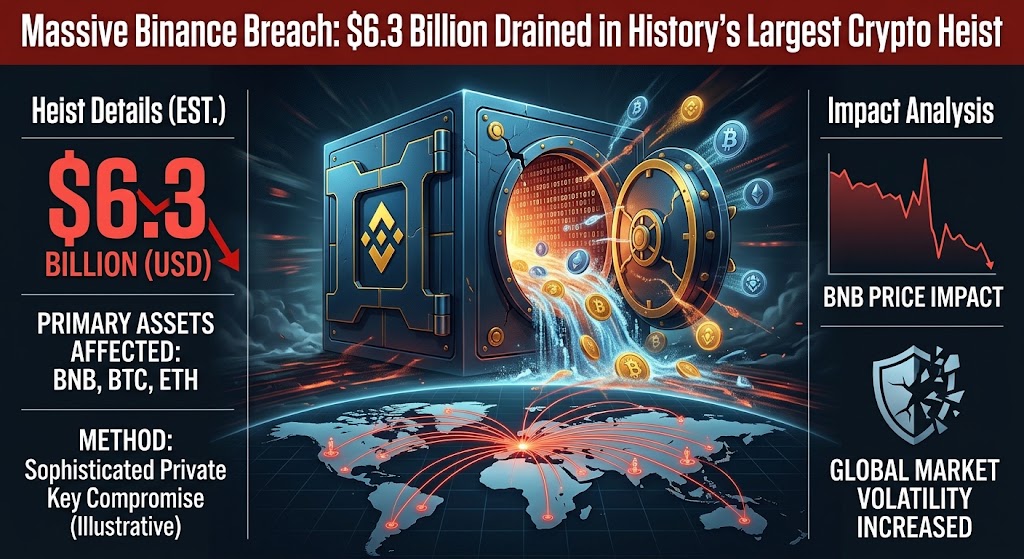
Binance has halted all user withdrawals following a devastating “complex attack” that drained approximately $6.3 billion from its hot wallets on October 29, 2026. The historic breach is the largest cryptocurrency theft on record. Despite the unprecedented scale, Binance co-CEOs Richard Teng and Yi He quickly reassured customers that all user losses will be fully…
-
Digital identity is how people and organizations prove who they are online. It’s changing quickly. The layers – Workforce identity: employees signing in with single sign-on, MFA, and passkeys through systems like Microsoft Entra ID – Customer identity: how customers create accounts and sign in to your services – Government and verifiable credentials: digital IDs…
-
Security agencies publish a steady stream of alerts. Knowing which ones apply to you is a practical skill. Where advisories come from – Canadian Centre for Cyber Security: alerts, advisories, and guidance for Canadian organizations – U.S. CISA and the FBI: joint advisories and emergency notices, including a list of vulnerabilities known to be exploited…
-

The Internet of Things (IoT) means everyday devices connected to your network: cameras, thermostats, badge readers, printers, smart TVs, sensors, and more. Benefits – Efficiency: automated lighting, heating, and cooling – Visibility: occupancy and equipment monitoring – Safety and security: smart cameras, door sensors, and environmental alarms – Productivity: smart meeting rooms and asset tracking…
-
For years, the headline was a shortage of cybersecurity workers. The latest research shows the problem has become more specific. What ISC2’s 2025 study found The 2025 ISC2 Cybersecurity Workforce Study surveyed more than 16,000 security professionals worldwide. – Skills shortages now outweigh headcount shortages. For the first time, ISC2 declined to publish a global…
-

Short answer: you don’t need to rush, but you should start paying attention. What governments are doing – Canada: In June 2025, the Canadian Centre for Cyber Security published a roadmap for migrating Government of Canada non-classified systems to post-quantum cryptography. Departments were to submit initial migration plans by April 2026, complete high-priority systems by…
-
Quantum computers use the principles of quantum physics to solve certain problems far faster than regular computers. One of those problems is breaking the math that protects much of today’s internet security. What’s at risk Much of today’s online security relies on public-key cryptography (such as RSA and elliptic curve methods) to protect: – Web…
-
Passwords are the weakest link in most security setups: they can be guessed, reused, leaked, or phished. Passkeys are designed to fix that. What is a passkey? A passkey is a cryptographic credential stored on your device (phone, laptop, or security key). When you sign in, your device proves you hold the key by unlocking…
-

Zero Trust means never assuming that a user, device, or network is safe just because it’s inside your office. Every request is verified. The core principles – Verify explicitly: check identity, device health, location, and risk for every access request – Use least privilege: give people only the access they need, for as long as…
-
Business email compromise (BEC) is fraud carried out through email or messaging: an attacker impersonates an executive, supplier, or employee to trick someone into sending money or sensitive data. Why it’s so costly The FBI’s Internet Crime Complaint Center recorded about US$2.77 billion in reported BEC losses in 2024, among the largest of any cybercrime…