

“Digital sovereignty” has moved from policy circles into procurement and business decisions.
What it means
Shared Services Canada describes digital sovereignty as the government’s ability to control and protect its digital assets, systems, and data, regardless of where technologies are developed, hosted, or supported. It goes beyond where data is stored (residency) to who has legal authority and operational control over it.
Why it’s rising
– Concern about foreign laws that may allow access to data held by foreign-owned providers
– Geopolitical and trade tensions
– Dependence on a small number of global cloud providers
– Government procurement priorities
What’s happening in Canada (2026)
– Federal procurement: Shared Services Canada has launched a procurement process to establish Sovereign Canadian Cloud capabilities, prioritizing Canadian-owned and controlled providers. Analysts have also noted that few Canadian providers appear on the federal approved cloud list so far.
– Canadian-led offerings: a group of Canadian companies (ThinkOn, Hypertec, Aptum, and eStruxture) announced a sovereign, AI-ready government cloud built around Canadian hardware, facilities, and control. Bell and SAP Canada announced an agreement to deliver a Canadian-operated sovereign cloud for the public sector and regulated industries.
– Global providers’ response: large providers have announced Canadian investments and sovereignty commitments, including a reported C$7.5 billion Canadian data-centre expansion by Microsoft.
– National AI strategy: Canada’s June 2026 AI strategy includes sovereignty as a pillar, alongside trust and opportunity.
What it means for a private business
– Customers and contracts (government, healthcare, defence, financial services) may specify Canadian-controlled hosting
– Compliance: Law 25 and other rules require careful handling of data transfers
– Risk management: concentration on one provider is a risk in itself
How to approach it
1. Classify your data: most workloads don’t need sovereign hosting. Identify the few that do.
2. Ask providers where data, support staff, and encryption keys are located, and which laws apply to them
3. Compare options: hyperscalers with Canadian regions, Canadian-owned providers, and hybrid designs
4. Weigh trade-offs: capability, cost, integration, and support differ
5. Avoid lock-in: use open standards and keep backups portable
A balanced view
Canadian hosting and Canadian ownership are different things, and neither automatically means better security. Decide based on actual requirements.
Sources: Shared Services Canada (February 2026), Bell and SAP Canada (February 2026).
DBR Soft can help you classify data and choose hosting that fits your obligations. Contact us for more information.
-
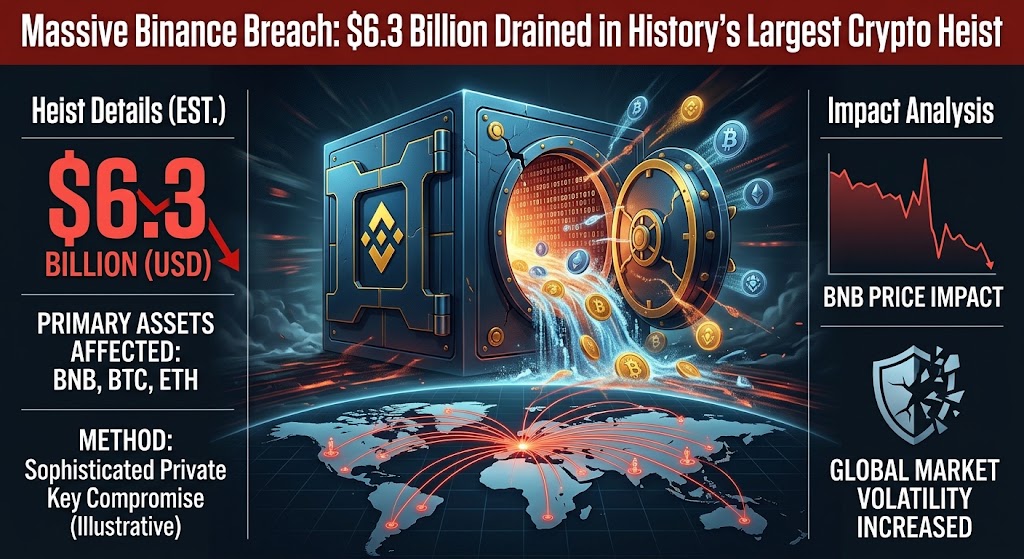
Massive Binance Breach: $6.3 Billion Drained in History’s Largest Crypto Heist
Binance has halted all user withdrawals following a devastating “complex attack” that drained approximately $6.3…
-

Epic Games Goes All-In on AI Acceleration for Fortnite and Unreal Engine 6
CHICAGO — Epic Games is no longer just experimenting with artificial intelligence; they are rewriting…
-

The Dawn of Optical Computing: How Akhetonics is Building the First All-Optical Processor
As artificial intelligence, quantum computing, and massive data centers push the limits of modern technology,…

Leave a Reply